
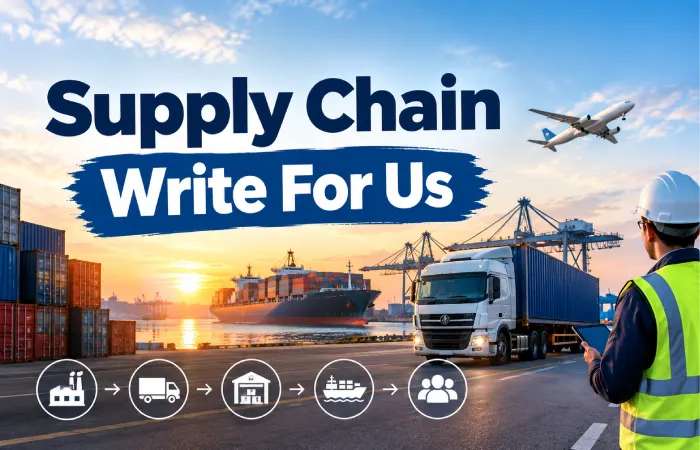
Supply Chain Write For Us
Supply chain management (SCM) involves planning, coordinating, and managing the flow of materials, products, information, and finances from suppliers to manufacturers, distributors, retailers, and customers. It covers the activities required to move a product or service from its original source to its final destination. Effective supply chain management helps businesses improve operational efficiency, control costs, meet customer expectations, and remain competitive.
In today’s interconnected economy, supply chains are essential to industries such as manufacturing, retail, healthcare, e-commerce, transportation, agriculture, and technology. Businesses depend on reliable suppliers, efficient logistics, accurate inventory management, and timely deliveries to maintain smooth operations. Disruptions caused by transportation delays, material shortages, changing demand, or global events can affect the entire supply chain.
Supply Chain Write For Us invites supply chain professionals, logistics specialists, business analysts, technology writers, researchers, and industry enthusiasts to contribute original articles to TechDirtBlog. If you have practical knowledge of supply chain management, procurement, warehouse operations, logistics technology, inventory planning, or supply chain sustainability, share your expertise with our readers.
Explore All Write For Us TopicsWhat Is Supply Chain Management?
Supply chain management is the process of coordinating the people, resources, systems, and activities involved in producing and delivering goods or services. It connects different stages of business operations, ensuring that materials and products move efficiently while the right information reaches the people who need it.
A typical supply chain may begin with raw material suppliers and continue through manufacturers, warehouses, transportation providers, distributors, retailers, and end customers. Depending on the business, it may also include service providers, recycling partners, and reverse logistics operations.
For example, an electronics manufacturer needs components from multiple suppliers, production facilities to assemble devices, warehouses to store finished products, and transportation partners to deliver orders. Effective supply chain management coordinates these activities so that products are available when customers need them.
Modern supply chains increasingly use digital systems, automation, data analytics, and cloud-based platforms to improve visibility and support faster decision-making.
Key Activities Involved in Supply Chain Management
Supply chain management includes several connected activities. Each contributes to the efficient movement of goods, information, and resources.
1. Supply Chain Planning
Planning involves forecasting demand, estimating resource requirements, determining production schedules, and setting appropriate inventory levels. Businesses use historical sales, market trends, seasonal patterns, and customer information to anticipate future needs.
Accurate planning can help reduce shortages, prevent excessive inventory, and improve coordination between suppliers and production teams. However, forecasts should be reviewed regularly because actual demand can differ from expectations.
2. Sourcing and Supplier Selection
Sourcing involves identifying, evaluating, and selecting suppliers that can provide the materials, components, or services a business needs. Organizations may compare suppliers based on price, quality, reliability, delivery performance, production capacity, and compliance requirements.
Building relationships with dependable suppliers can reduce uncertainty and improve long-term performance. Businesses may also evaluate alternative suppliers for critical materials to reduce dependence on a single source.
3. Procurement
Procurement covers the purchasing process, including requesting quotations, negotiating contracts, issuing purchase orders, and coordinating deliveries. It helps ensure that goods and services are acquired at suitable prices and meet the organization’s requirements.
Effective procurement combines cost control with quality management, supplier reliability, and responsible purchasing practices.
4. Production and Manufacturing
Production transforms raw materials and components into finished goods. Supply chain teams coordinate with manufacturing departments to ensure materials arrive according to production schedules.
Efficient production planning can reduce delays, improve resource utilization, and limit waste. Businesses may use production management software and real-time information to identify bottlenecks and adjust schedules.
5. Inventory Management
Inventory management involves monitoring raw materials, work in progress, and finished products. Businesses must balance product availability against the costs of storage, insurance, handling, and unsold stock.
Inventory management methods include safety stock planning, reorder points, demand forecasting, and just-in-time approaches where suitable. The right method depends on product characteristics, demand uncertainty, supplier lead times, and operational requirements.
6. Warehousing and Storage
Warehousing involves receiving, storing, organizing, picking, packing, and preparing goods for distribution. Well-managed warehouses help businesses maintain inventory accuracy and process orders efficiently.
Warehouse management systems can support stock tracking, location management, order picking, and reporting. Automation may also improve productivity in operations with suitable volumes and requirements.
7. Transportation and Logistics
Transportation moves materials and finished goods between suppliers, factories, distribution centers, retailers, and customers. Businesses may use road, rail, air, sea, or multimodal transportation depending on delivery requirements, cost, distance, and cargo type.
Effective logistics planning helps reduce unnecessary travel, improve delivery reliability, and control transportation expenses.
8. Order Fulfillment and Customer Service
Order fulfillment includes receiving customer orders, checking product availability, preparing shipments, and delivering products to their destinations. Customer service handles questions, delivery issues, returns, and other post-purchase needs.
Reliable order fulfillment can improve customer satisfaction and encourage repeat business. Accurate tracking information also helps customers understand the status of their purchases.
9. Returns and Reverse Logistics
Reverse logistics manages products moving back from customers to sellers or manufacturers. Reasons include returns, repairs, recycling, refurbishment, and product recalls.
An effective reverse logistics process can reduce waste, recover product value, improve customer experiences, and support sustainability goals.
Benefits of Effective Supply Chain Management
A well-managed supply chain can improve business performance by connecting planning, procurement, production, logistics, and customer service.
Increased Profitability
Supply chain optimization can reduce avoidable expenses, minimize operational waste, and improve the use of resources. Better product availability and reliable fulfillment can also support sales and customer retention.
Reduced Operating Costs
Businesses can control costs by improving inventory accuracy, selecting suitable transportation methods, negotiating effectively with suppliers, and reducing unnecessary handling or storage.
Improved Customer Satisfaction
Customers expect accurate orders, dependable delivery times, and clear communication. An efficient supply chain helps businesses meet these expectations and resolve problems more effectively.
Greater Flexibility
Demand can change because of seasonal patterns, market trends, promotions, or unexpected events. Businesses with flexible sourcing, suitable inventory policies, and responsive logistics can adjust more effectively.
Better Risk Management
Supply chain risk management helps identify vulnerabilities such as supplier concentration, transport disruptions, quality issues, cyberattacks, and geopolitical uncertainty. Contingency planning and alternative sourcing can help reduce exposure.
Improved Visibility and Decision-Making
Accurate information about inventory, shipments, production schedules, and supplier performance helps managers identify problems earlier and make informed decisions.
Stronger Sustainability Practices
Responsible sourcing, efficient transportation, better packaging, and waste reduction can help reduce environmental impacts. Sustainability initiatives may also improve resource efficiency and support applicable reporting requirements.
Common Supply Chain Challenges
Supply chain operations involve many organizations, locations, systems, and processes. This complexity creates challenges that businesses must address through careful planning and continuous improvement.
Demand Forecasting Errors
Unexpected changes in customer demand can lead to excess inventory or product shortages. Businesses can improve forecasting by combining historical data with current market information and regularly reviewing assumptions.
Supplier Delays and Shortages
Suppliers may experience production problems, raw material shortages, financial difficulties, or transportation disruptions. Supplier monitoring, contingency plans, and alternative sourcing options can improve resilience.
Rising Transportation Costs
Fuel prices, labor expenses, route disruptions, and changes in shipping demand can increase logistics costs. Businesses can evaluate route planning, shipment consolidation, carrier performance, and suitable transport alternatives.
Limited Supply Chain Visibility
When departments and partners use disconnected systems, managers may struggle to determine where goods are located or why a delivery is delayed. Shared data, standardized processes, and integrated supply chain platforms can improve visibility.
Inventory Imbalances
Excessive inventory ties up working capital, while insufficient stock can delay orders and reduce sales. Businesses need inventory policies that reflect demand patterns, supplier lead times, product value, and uncertainty.
Cybersecurity and Data Risks
Digital supply chains exchange information across suppliers, logistics providers, and business systems. Compromised accounts, insecure integrations, and data breaches can interrupt operations. Access controls, secure data exchange, software updates, and supplier security assessments help reduce these risks.
The Role of Technology in Supply Chain Management
Technology is changing how organizations plan, monitor, and manage supply chain activities. Digital tools can improve information sharing, automate repetitive tasks, and help teams identify operational problems.
Artificial Intelligence and Predictive Analytics
AI-powered tools can analyze historical transactions, demand patterns, and operational data to support forecasting, inventory planning, and risk identification. Their usefulness depends on data quality, appropriate validation, and human oversight.
Internet of Things (IoT)
Connected sensors can monitor the location, condition, or movement of goods and equipment. Temperature sensors, for example, can help monitor sensitive products during transportation, while location tracking can improve shipment visibility.
Cloud-Based Supply Chain Platforms
Cloud systems help authorized teams access shared information about purchase orders, inventory, suppliers, and shipments. Integrated platforms can reduce manual data entry and improve coordination between departments and external partners.
Warehouse Automation
Barcode scanning, automated storage systems, robotics, and warehouse management software can improve accuracy and productivity. Businesses should assess the costs, maintenance needs, workforce implications, and expected benefits before adopting automation.
Blockchain and Digital Traceability
Some supply chain applications use distributed ledger technology to record transactions and support traceability. Its suitability depends on the use case, implementation cost, data quality, governance, and participation of supply chain partners.
Digital Twins and Simulation
Digital twins and simulation tools can help organizations model facilities, logistics networks, and supply chain scenarios. These tools may support planning by allowing teams to evaluate possible changes before implementing them in real operations.
Supply Chain Risk Management and Resilience
Supply chain resilience is the ability to prepare for, respond to, and recover from disruptions. It is increasingly important for businesses that rely on international suppliers, complex manufacturing networks, or time-sensitive deliveries.
Organizations can strengthen resilience through several practices:
- Map critical suppliers: Understand where essential materials originate and identify dependencies on specific suppliers or locations.
- Diversify sourcing: Consider alternative suppliers when practical, particularly for critical components.
- Monitor supplier performance: Track quality, delivery reliability, financial stability, and relevant compliance indicators.
- Maintain suitable safety stock: Set inventory buffers based on risk, demand variability, lead times, and the cost of holding stock.
- Develop contingency plans: Establish alternative transportation routes, backup suppliers, and recovery procedures.
- Improve information sharing: Coordinate with suppliers, logistics partners, and internal teams to identify problems early.
- Review cybersecurity risks: Assess the security of systems and third parties that access supply chain data.
- Test recovery plans: Conduct exercises to evaluate whether teams can respond effectively to realistic disruptions.
Risk management should be proportionate to the organization’s size, industry, products, and operational dependencies.
Supply Chain Performance Metrics
Businesses use supply chain metrics to measure efficiency, reliability, cost, and service quality. The most useful metrics depend on organizational objectives and the type of supply chain being managed.
Common performance indicators include:
- On-time delivery rate: Measures the proportion of orders delivered by the agreed deadline.
- Order fulfillment cycle time: Tracks the time required to complete an order from receipt to delivery.
- Inventory turnover: Indicates how frequently inventory is sold or used during a particular period.
- Order accuracy: Measures whether customers receive the correct products and quantities.
- Forecast accuracy: Evaluates how closely demand forecasts match actual demand.
- Supplier performance: Assesses supplier quality, reliability, responsiveness, and delivery consistency.
- Cost per order: Measures the cost associated with processing and fulfilling orders.
- Return rate: Tracks the proportion of products returned and can help reveal quality or fulfillment issues.
Metrics should be interpreted together rather than in isolation. For example, reducing inventory may lower storage costs but could also increase stockouts if demand or supplier lead times are unpredictable.
Supply Chain Sustainability and Collaboration
Sustainable supply chain management considers environmental, social, and economic impacts throughout the movement of goods and services. Businesses can examine supplier practices, energy consumption, packaging, transportation emissions, waste management, and product life cycles.
Collaboration is equally important. Suppliers, manufacturers, distributors, retailers, and customers often hold different pieces of information needed to coordinate the supply chain effectively.
Organizations can improve collaboration by sharing accurate forecasts, agreeing on performance measures, establishing clear communication channels, and resolving problems jointly. Responsible supplier selection and ongoing performance reviews can also help businesses identify opportunities for improvement.
Sustainability and collaboration should be supported by measurable objectives and credible information. Businesses should avoid making environmental claims that cannot be substantiated.
Supply Chain Write For Us – Topics You Can Cover
TechDirtBlog welcomes original guest contributions about supply chain management, logistics, business operations, and technology. Writers can submit practical guides, industry analysis, educational articles, and evidence-based discussions.
Suggested topics include:
- Supply chain management best practices
- Logistics and transportation optimization
- Procurement and supplier relationship management
- Inventory management and demand forecasting
- Warehouse management systems and automation
- Supply chain visibility and real-time tracking
- Supply chain risk management and resilience
- Artificial intelligence in supply chain planning
- IoT applications in logistics and transportation
- Supply chain sustainability and responsible sourcing
- Supply chain performance metrics and analytics
- Digital transformation in supply chain operations
- E-commerce fulfillment and last-mile delivery
- Reverse logistics, returns, and recycling
- Cybersecurity for connected supply chains
- Supply chain solutions for small businesses
- Global sourcing and international logistics
Choose a subject that matches your experience and provides useful information to readers. Strong submissions explain key concepts clearly, use relevant examples, and support important claims with reliable sources.
How to Submit Your Articles?
To contribute an article to TechDirtBlog, prepare an original, informative submission about supply chain management or a related business and technology topic.
Email your proposed article or topic pitch to contact@techdirtblog.com. Include your proposed title, a short summary, and relevant author information. You may submit your article as a Word document for editorial review.
Before sending your submission, ensure that it is original, factually accurate, clearly organized, and written for the intended audience. Include credible references where appropriate and provide at least one high-resolution, royalty-free or properly licensed image.
TechDirtBlog reserves the right to edit submissions for clarity, formatting, accuracy, and editorial suitability. Submission does not guarantee publication.
Who Should Post on TechDirtBlog?
TechDirtBlog welcomes contributors who can share valuable knowledge about supply chains, logistics, operations, and related technologies.
Potential contributors include:
- Supply chain managers and logistics professionals.
- Procurement specialists and sourcing consultants.
- Warehouse and inventory management professionals.
- Business analysts and operations managers.
- Technology writers covering logistics software and automation.
- Researchers and educators studying supply chain systems.
- Entrepreneurs and business owners with relevant experience.
- Students and enthusiasts who can produce well-researched, accurate articles.
Contributors should aim to educate readers, explain practical challenges, and provide useful insights rather than focus primarily on promoting a product or service.
Rules and Tips for Publishing Articles – Supply Chain Write For Us
Please follow these requirements when preparing a guest article for TechDirtBlog:
- Submit original, plagiarism-free content that has not been republished without permission.
- Check grammar, spelling, structure, and factual accuracy before submission.
- Use clear headings, concise paragraphs, and relevant examples.
- Support important claims with credible sources and reliable data.
- Avoid keyword stuffing, misleading claims, and unnecessary repetition.
- Keep the article informative rather than promotional. Excessive self-promotion and affiliate-focused articles are not accepted.
- Include at least one high-resolution, royalty-free or properly licensed image.
- Submit an article of at least 900 words that provides meaningful value to readers.
- Choose a topic relevant to TechDirtBlog’s business and technology audience.
- Include external links only when they genuinely support the article and meet editorial standards.
- Be prepared for editorial changes that improve clarity, organization, or readability.
Compulsory requirements: Articles must be original, relevant to the target audience, at least 900 words long, and accompanied by a suitable high-resolution image. All image licensing requirements must be respected.
Why Write for TechDirtBlog – Supply Chain Write For Us
- TechDirtBlog welcomes fresh, original, informative content about supply chain management and related business and technology topics.
- Articles should contain at least 900 words and offer useful information, advice, or insights about supply chain operations.
- Promotional content, excessive self-promotion, and affiliate-focused articles are not accepted.
- Submit your original article and proposed title by emailing contact@techdirtblog.com.
- Related guest-post topics about logistics, procurement, inventory management, supply chain technology, and sustainability are welcome.
Guidelines of the Article – Supply Chain Write For Us
- TechDirtBlog welcomes fresh, original, informative content about supply chain management and related business and technology topics.
- Articles should contain at least 900 words and offer useful information, advice, or insights about supply chain operations.
- Promotional content, excessive self-promotion, and affiliate-focused articles are not accepted.
- Submit your original article and proposed title by emailing contact@techdirtblog.com.
- Related guest-post topics about logistics, procurement, inventory management, supply chain technology, and sustainability are welcome.
Guidelines for Supply Chain Write For Us
When writing about supply chain management, consider covering the following areas:
- Supply chain best practices: Explain practical methods for improving planning, procurement, inventory management, and delivery performance.
- Supply chain metrics: Discuss how organizations measure delivery reliability, inventory turnover, order accuracy, and operational costs.
- Supply chain risk management: Describe methods for identifying, assessing, and reducing disruptions throughout the supply chain.
- Supply chain sustainability: Explore responsible sourcing, waste reduction, efficient transportation, and environmental considerations.
- Supply chain visibility: Explain how businesses track products, inventory, shipments, and information across supply chain operations.
- Supply chain collaboration: Discuss how suppliers, manufacturers, logistics providers, and customers can coordinate more effectively.
- Supply chain technology: Examine how software, analytics, automation, and connected devices can improve operational performance.
A valuable supply chain article should provide accurate information, clear explanations, and practical recommendations. By sharing your knowledge with TechDirtBlog, you can help readers understand supply chain challenges, explore useful technologies, and discover strategies for improving efficiency and resilience.
Our “Write For Us” pages are created for writers, bloggers, content creators, and individuals who enjoy writing and reading informative blogs. These pages provide an opportunity for contributors to share original, useful, and reader-friendly content related to the topics listed on our website